
Three of Swords Reversed and Upright Meaning
Lucid Oracle · Based on the Rider-Waite-Smith tradition
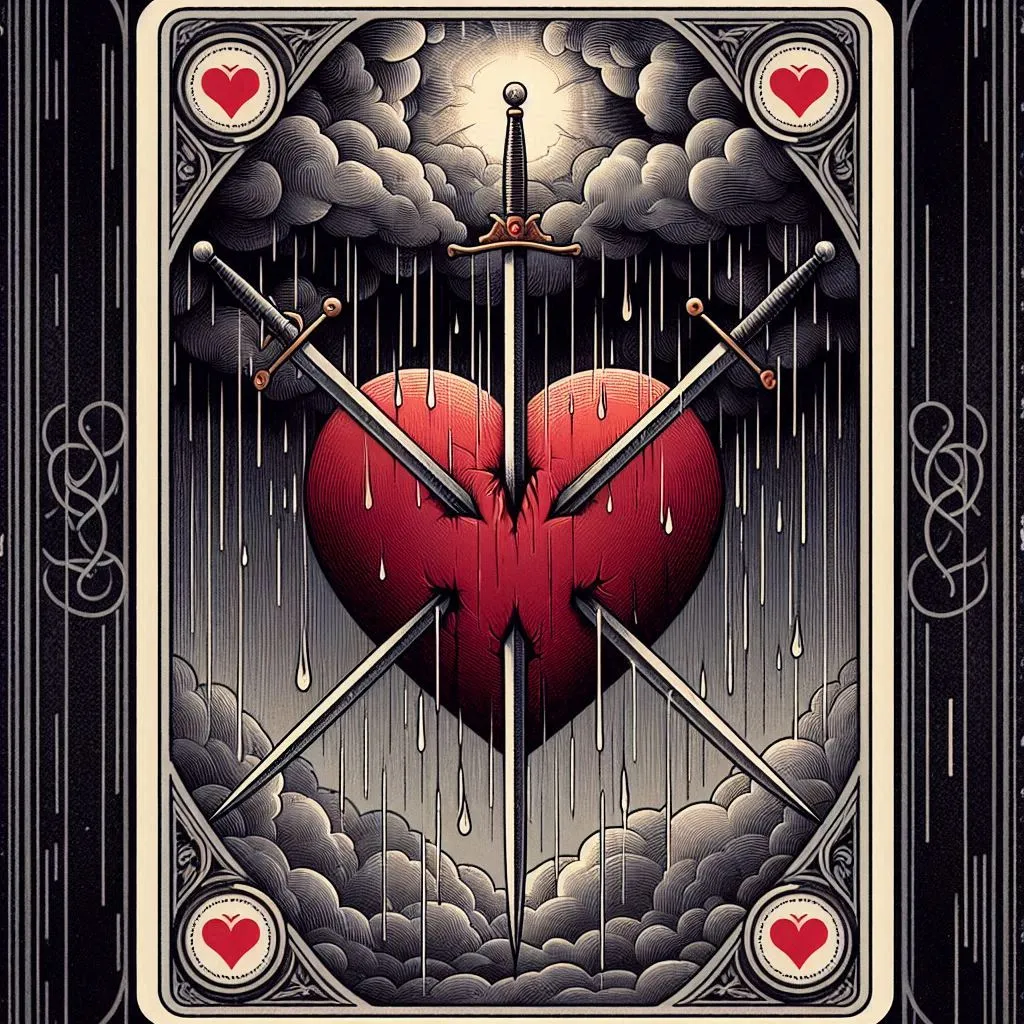
The Three of Swords is the tarot's plainest picture of heartbreak: a loss, a betrayal or a hard truth that hurts because it matters. Upright, it names the pain. Reversed, it most often means the hurt is loosening, though it can also mean you are keeping it inside instead of letting it be felt.
What Does Three of Swords Mean for You?
A card's meaning shifts with your question and context. See what Three of Swords is telling you right now.
If one person keeps replaying, read this firstThree of Swords reversed meaning
Psychological readingReversed, the Three of Swords tends to describe recovery that is already under way: the first morning you did not wake up thinking about it, the first time you could say the name without flinching. It can mark forgiveness, of someone else or of yourself, and the slow return of trust after a breakup, a falling-out or a disappointment.
There is a second reading, and the difference is in how you feel when you look at the situation. If you feel lighter, the card points to healing. If you feel numb, or you keep saying you are fine while the subject stays off limits, it can point to pain that is held down instead of worked through. Pain pushed aside rarely stays quiet; it tends to show up as irritability or distance from people you like.
If grief or heartbreak feels too heavy to carry alone, talking with someone you trust or a counselor can help, and no card replaces that.
Three of Swords reversed in love
In a love reading, the reversed card often follows the worst of a breakup. The question it raises is whether you are ready to stop replaying what happened. It can describe reconciliation after a painful argument when both people are willing to name what hurt, and it can describe closure that arrives without any conversation at all.
It is also a caution about rebounds. If the sharp pain has eased, it is tempting to treat the next person as proof you have healed. Give that a few weeks and see whether the lightness holds.
For a relationship that is still together, the reversed card can suggest that an old wound, such as an affair or a broken promise, is being talked about honestly for the first time. That is uncomfortable, and it is also how repair usually starts.
Three of Swords yes or no
Upright, the Three of Swords leans toward no, mostly because it shows a painful truth or a loss, and most questions people ask are about avoiding both. If your question is about whether an honest conversation will hurt, the answer is probably yes, and it may still be the right conversation.
Reversed, the card softens. On a three of swords reversed yes or no question, expect a cautious yes when you are asking about recovery, forgiveness or moving on, and a not yet when you are asking about getting back together while the hurt is still fresh. Treat it as a direction, not a verdict.
Three of Swords meaning upright, including work
Upright, the card is direct: grief, a painful separation, an unwelcome truth, a moment where saying something aloud cuts because it is accurate. It does not predict a disaster; it recognizes one that has already arrived or is about to be named.
At work, the upright card can point to a layoff, a hard review, a team falling apart or a project you cared about ending. The reversed card in a career reading more often points to the aftermath, meaning a slow recovery of confidence, or a lesson you are only now able to look at.
Traditions and folk meanings
A card that tells its story in a picture
The minor arcana of the Rider-Waite-Smith deck were designed by Pamela Colman Smith, who is thought to have studied the Italian Sola Busca tarot of about 1491 at the British Museum. Sola Busca is notable because its numbered cards also carry full pictures.
That influence is part of why a card like the Three of Swords can be read as a scene and not only a number. The picture gives readers something to react to before they look up a single keyword.
Is there one hurt you have stopped talking about because it is easier that way? Notice whether that silence feels like peace or like holding your breath.
Upright Meaning
Upright, the Three of Swords stands for heartbreak, grief and a painful truth that has to be faced. It can describe a breakup, a betrayal or a loss that hurts because it mattered. The card does not predict the pain; it names it so it can be dealt with.
Reversed Meaning
Reversed, the Three of Swords usually points to healing: forgiveness, release and the slow easing of an old hurt. It can also warn of pain that is being held in or pushed aside instead of felt. How you feel when you think about the situation tells you which reading fits.
Common Questions
Does the Three of Swords reversed mean a breakup is over?
It usually means the sharpest pain is passing, not that the relationship has ended or will end. In a reading about a current relationship, it can describe repair after a hurtful event. In a reading about a past one, it often describes relief and the ability to think about it calmly.
Is the Three of Swords always a bad card?
It is a painful card, but not a cruel one. It names something true, and naming a loss is often what lets a person start to recover. Reversed, it is one of the gentler ways to see pain, because the worst has often passed.
What does the Three of Swords mean for feelings?
As someone's feelings, it points to hurt, disappointment or sadness, sometimes tied to you and sometimes not. Reversed, it can mean they are trying to move past the pain or are hiding how much they are hurt.
Related Cards
Related Dream Symbols
For entertainment and personal reflection — not a substitute for professional advice.
Researched and written with AI assistance, following the Lucid Oracle editorial guidelines. How our interpretations are written
Personal insights powered by AI
Understand What the Cards Mean for You
A card's meaning changes with your question and your moment. Tell us what you're exploring and see what comes through.