
The Hierophant Upright and Reversed: Meaning and Card Keywords
Lucid Oracle · Based on the Rider-Waite-Smith tradition
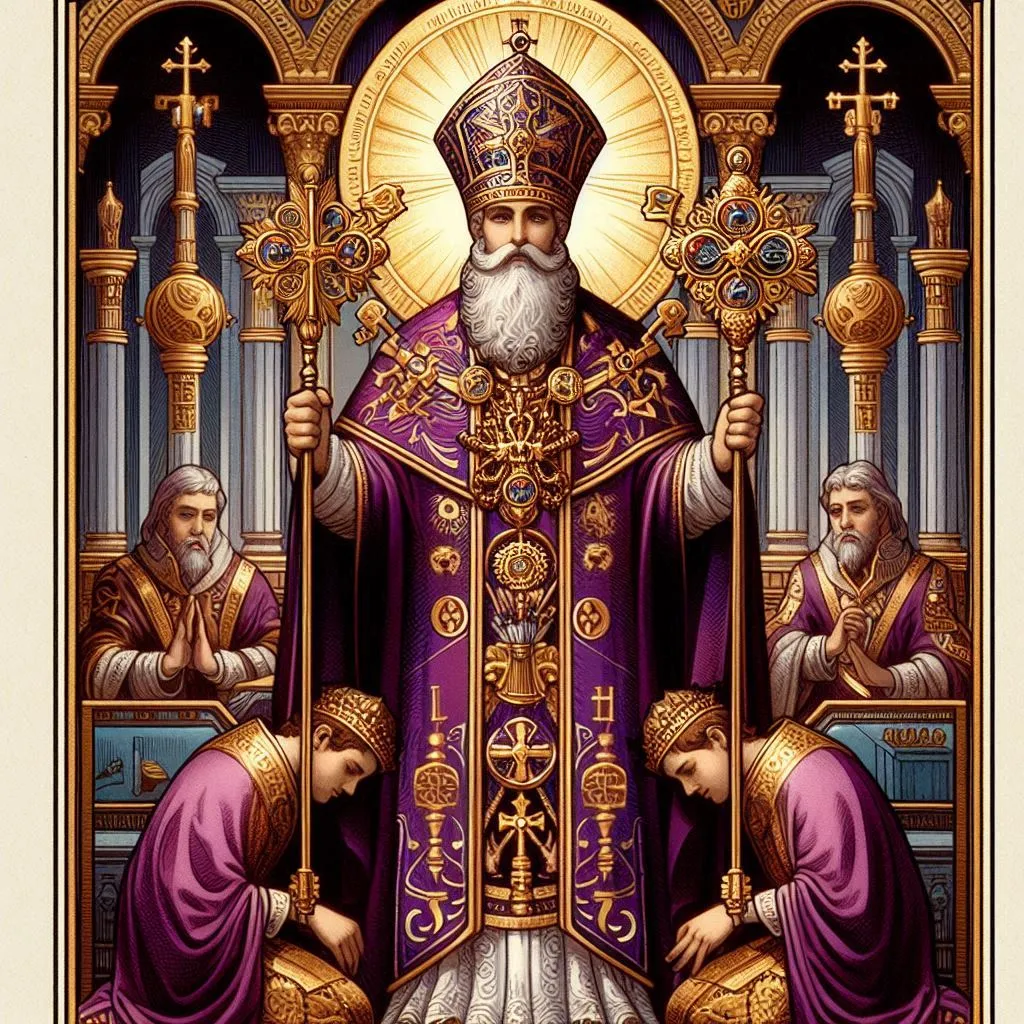
The Hierophant stands for tradition: the rules, institutions, teachers and shared customs that tell a group how things are done. Upright, it asks you to learn from what already works, whether that is a mentor, a training program or a family custom. Reversed, it points to questioning those rules, leaving a routine that no longer fits, or feeling boxed in by other people's expectations.
What Does The Hierophant Mean for You?
A card's meaning shifts with your question and context. See what The Hierophant is telling you right now.
If one person keeps replaying, read this firstThe Hierophant upright: card keywords and meaning
Upright keywords: tradition, convention, institutions, mentorship, learning, shared values, commitment, belonging to a group.
The upright Hierophant is the card of doing things the established way. It can show a formal setting such as a school, a company with clear procedures, a wedding full of family customs, or any group held together by agreed rules. In a reading, it often says the conventional route is the right one for now: take the course, follow the process, ask the person who has done this before.
It is also a card of teacher and student. You may be the one learning, with a mentor who can show you the ropes. Or you may be the person others come to because you understand how a system works and can explain it.
The upright card does not ask you to give up your own judgment. It asks you to see what a tradition already knows before you decide to change it. A recipe handed down by a grandparent, the onboarding notes at a new job, the advice of a senior colleague: each carries experience you would otherwise have to earn the hard way.
The Hierophant reversed: card keywords and meaning
Reversed keywords: rebellion, nonconformity, questioning rules, freedom from expectations, an unconventional path, rigid dogma, a controlling mentor.
The Hierophant reversed has two common readings, and the difference lies in where the pressure comes from. In the first, you are the one pushing back. A rule, a family expectation or a workplace habit no longer makes sense to you, and the card supports asking why. This can look like leaving a path everyone assumed you would follow, choosing a different shape of relationship, or teaching yourself a skill instead of going the official route.
In the second, the trouble lies with the structure itself. A rule is being enforced rigidly, a group demands loyalty without explanation, or a mentor seems more interested in control than in teaching. Here the reversed card asks you to trust your own sense of what is fair.
What tips it one way or the other is how you feel about the rules in question. If you feel curious and lighter, it is the healthy kind of nonconformity. If you feel guilty, pressured or small, look closely at who actually benefits from the rule.
Hierophant reversed in love, and the upright love reading
Upright, the Hierophant in love points to commitment in a traditional form: meeting the family, moving in together, an engagement, a wedding, or simply agreeing on shared values. It suits relationships that want stability and a clear shape. If you are single, it can describe meeting someone through a familiar setting such as a class, a workplace or friends of the family.
The Hierophant reversed in love often shows a relationship that does not follow the expected script. That can be entirely positive: a couple setting their own timeline, living apart, or deciding not to marry, without apologizing for it. It can also point to friction with family expectations, such as relatives who disapprove of a partner or keep asking when you will settle down.
The harder version is a relationship run on rules only one person agreed to. If the reversed Hierophant appears next to cards of conflict, ask whether the rules of your relationship were ever talked about or simply assumed.
The Hierophant reversed yes or no
Upright, the Hierophant is usually a yes, on the condition that you go about it the standard way. Apply through the proper channel, finish the paperwork, ask permission first. Shortcuts are what turn this answer into a no.
The Hierophant reversed yes or no answer leans toward no for anything that depends on approval from an institution or an authority figure, at least on the terms you first proposed. It leans toward yes when your real question is whether to do something your own way. The reversed card often backs a break from convention once that convention has stopped serving you.
When in doubt, rephrase the question. Asking whether they will approve may draw a no from the reversed card, while asking whether to go ahead on your own terms may draw a clear yes.
The Hierophant reversed career meaning
At work, the upright Hierophant favors established employers, formal training, certifications and roles with a clear ladder. It is a good card for exams, onboarding, joining a professional association or learning from a senior colleague who knows the unwritten rules.
Reversed, the career reading turns toward independence. You may be tired of rigid procedures, office politics, or a manager whose answer to every idea is that this is how it has always been done. The card can point to freelancing, starting something of your own, retraining, or changing how a team works from the inside.
It can also flag a workplace that punishes questions. If new ideas get shut down and loyalty counts for more than results, the reversed Hierophant suggests deciding how much of yourself you are willing to keep bending to fit that mold.
If you are weighing two job offers, the upright card leans toward the established employer with training and structure, while the reversed card leans toward the role that gives you more say in how you work. Neither is wrong; the card shows which one fits this stage of your working life.
Hierophant in the future position and as a person
In the future position, the upright Hierophant suggests things will settle into a more formal shape: a commitment made official, a course completed, a new role with clear responsibilities. Reversed in the future, it points to a coming break from a routine or a group, often one you choose for yourself.
As a person, the Hierophant describes a teacher, a counselor, a manager, an older relative, or anyone who holds a set of rules and passes them on. They can be reassuring and wise, or rigid and judgmental, depending on the cards around them. This person can also be you.
Reversed as a person, the card describes either a free thinker who questions authority or someone who uses their position to control others. The neighboring cards, and your own experience of the person, will tell you which one you are dealing with.
Traditions and folk meanings
Before the Hierophant: the Pope card
The Hierophant was originally called the Pope, Le Pape in the Tarot de Marseille, and its figure wears papal insignia. The later name widened how the card is read, from one specific office to any keeper of tradition: a teacher, an institution, a set of shared customs.
That history helps when you read the card today. The figure is someone with authority who passes knowledge on to others. Whether that authority supports you or hems you in is the question the card raises, upright or reversed.
Pick one rule you follow without thinking, at work, at home or in love. Is it still yours, or are you keeping it out of habit or to please someone else?
Upright Meaning
Upright, the Hierophant stands for tradition, institutions and learning from a trusted teacher. It favors the conventional route, formal commitments and shared values. Following the process tends to pay off here.
Reversed Meaning
Reversed, the Hierophant points to questioning rules and breaking from expectations. It can mean healthy independence and a path of your own, or a warning about rigid authority and pressure to conform. Your feelings about the rules in question show which applies.
Common Questions
What are the Hierophant upright card keywords?
The core upright keywords are tradition, convention, institutions, mentorship and commitment. They describe learning from an established system and belonging to a group with shared values. The card favors the tried-and-tested route.
What does the Hierophant reversed mean?
The Hierophant reversed means questioning rules, traditions or authority. It can show healthy independence and a path of your own, or a rule or mentor that has become too rigid. How you feel about the rules involved usually tells you which.
Is hierophant reversed a bad card to get?
No. Hierophant reversed often supports you in breaking a habit or expectation that no longer fits. It becomes a warning only when it shows pressure from a controlling person or group.
How do you interpret the Hierophant tarot card in a spread?
Read the Hierophant as the part of your question shaped by rules, customs or a teacher. Ask what the expected way of doing things is here, and whether it helps you. The cards beside it show whether to follow that way or step off it.
What does the Hierophant reversed mean as feelings?
As feelings, the reversed Hierophant can describe someone who feels torn between what they want and what their family or community expects. It can also show a person who wants a relationship on their own terms rather than a traditional one.
Is the Hierophant a religious card?
The card began as the Pope in older decks, so its imagery comes from church history. In modern readings it covers any tradition or institution, from schools to workplaces to family customs. Reading it does not depend on holding any particular belief.
Related Cards
Related Dream Symbols
For entertainment and personal reflection — not a substitute for professional advice.
Researched and written with AI assistance, following the Lucid Oracle editorial guidelines. How our interpretations are written
Personal insights powered by AI
Understand What the Cards Mean for You
A card's meaning changes with your question and your moment. Tell us what you're exploring and see what comes through.